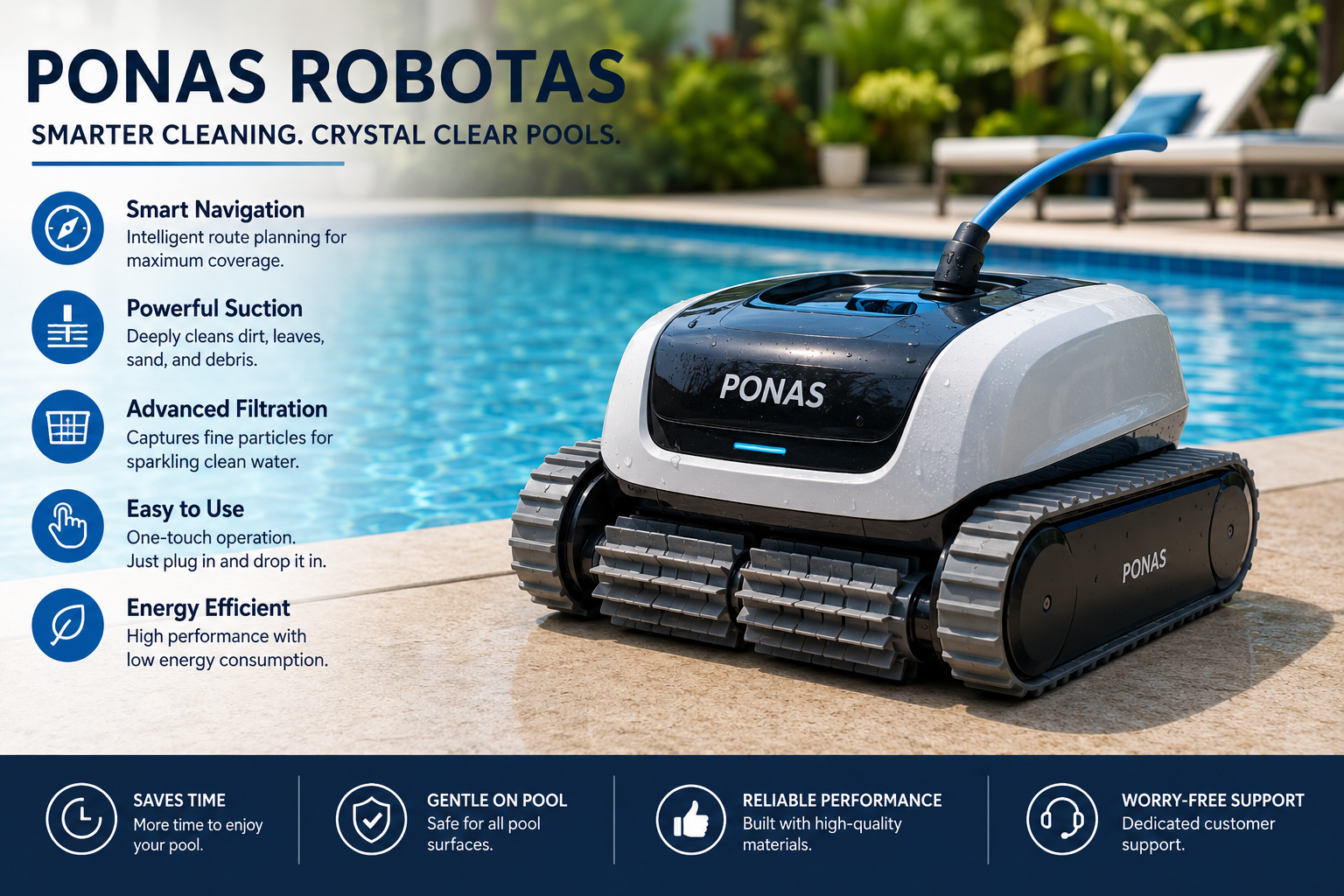
PONAS Robotas: The Ultimate Guide to Robotic Pool Cleaning
Primary Keyword: PONAS Robotas
SEO Title: PONAS Robotas: Features, Benefits, Guide & Review
Meta Description: Discover PONAS Robotas, its key features, benefits, cleaning performance, maintenance tips, and whether this robotic pool cleaner is worth considering.
Suggested URL: /ponas-robotas/
Introduction
Keeping a swimming pool clean can be time-consuming, especially when leaves, dirt, sand, and other debris constantly collect on the pool floor and walls. A robotic pool cleaner can make this routine much easier by automating much of the cleaning process.
PONAS Robotas is designed around this idea, offering an automated approach to pool maintenance. Instead of spending hours manually vacuuming and brushing the pool, a robotic cleaner can perform much of the work with minimal supervision.
In this guide, we look at what PONAS Robotas is, how robotic pool cleaning works, its potential benefits, important maintenance considerations, and what buyers should consider before purchasing one.
What Is PONAS Robotas?
PONAS Robotas refers to a robotic pool-cleaning solution designed to help automate swimming-pool maintenance. Robotic pool cleaners generally use electric motors, brushes, filtration systems, sensors, and programmed cleaning patterns to move around a pool and collect debris.
The main advantage of this type of cleaner is convenience. Once properly set up, the machine can work independently while the pool owner handles other tasks.
Depending on the specific model and configuration, robotic pool cleaners may be designed to clean areas such as:
- Pool floors
- Walls
- Waterlines
- Steps and corners
- Different types of pool surfaces
Because specifications can vary between models, buyers should always check the manufacturer’s current documentation before making a purchase.
Key Features to Look For
When evaluating PONAS Robotas, several features are particularly important.
1. Automated Cleaning
Automation is the primary reason people choose robotic pool cleaners. Instead of manually pushing a vacuum around the pool, the robot can navigate the swimming area and collect debris.
2. Brush and Filtration System
Brushes help loosen dirt from the pool surface, while the filtration system captures debris. A good filtration system is especially useful for removing leaves, sand, hair, and smaller particles.
3. Smart Navigation
Modern robotic cleaners may use sensors and programmed navigation patterns to reduce unnecessary movement. Efficient navigation can potentially improve cleaning coverage while reducing wasted operating time.
4. Easy Operation
A robotic cleaner should ideally be straightforward to start, remove, clean, and store. Simple operation is particularly useful for pool owners who want less complicated maintenance.
5. Energy Efficiency
Because robotic pool cleaners operate using electricity, energy consumption is another factor worth considering. Efficient operation can help keep ongoing running costs under control.
Benefits of Using PONAS Robotas
A robotic pool cleaner can provide several practical advantages.
Saves Time
Manual pool cleaning can require regular vacuuming, brushing, and debris removal. Automation can reduce the amount of hands-on work required.
Reduces Cleaning Effort
Instead of continuously monitoring a manual cleaner, a robotic system can handle much of the cleaning process independently.
Helps Maintain a Cleaner Pool
Regular removal of dirt and debris can contribute to a cleaner swimming environment. However, robotic cleaning should be considered part of a broader pool-maintenance routine rather than a complete replacement for water testing and chemical management.
Convenient for Regular Maintenance
Consistent cleaning is easier when the process is automated. This can encourage pool owners to maintain a regular cleaning schedule.
Potential Long-Term Value
Although a robotic cleaner can represent a significant upfront purchase, the convenience and reduced manual workload may make it worthwhile for some pool owners.
How Does a Robotic Pool Cleaner Work?
The basic process is relatively simple.
- The cleaner is placed in the swimming pool according to the manufacturer’s instructions.
- Its motor powers the wheels or tracks.
- Brushes loosen dirt from the pool surface.
- The filtration system collects debris.
- Sensors or programmed navigation help the robot move around the pool.
- After cleaning, the machine is removed and its filter is emptied and cleaned.
The exact cleaning pattern and capabilities depend on the individual model.
PONAS Robotas vs. Traditional Pool Cleaning
| Feature | Robotic Pool Cleaner | Traditional Manual Cleaning |
|---|---|---|
| Cleaning | Automated | Manual |
| Time required | Lower hands-on effort | Higher hands-on effort |
| Navigation | Automated/programmed | User controlled |
| Debris collection | Integrated filter | Separate equipment often required |
| Convenience | High | Moderate |
| Maintenance | Filter and brush cleaning | Regular manual equipment maintenance |
The best choice depends on the pool owner’s budget, pool size, cleaning requirements, and willingness to perform manual maintenance.
Is PONAS Robotas Worth Considering?
For someone looking to reduce the amount of manual pool cleaning, PONAS Robotas may be an appealing option.
However, the right decision should not be based on the product name alone. Before buying, check the exact model’s:
- Pool-size compatibility
- Cleaning coverage
- Filtration capacity
- Cable or power requirements
- Cleaning cycle duration
- Warranty
- Replacement parts availability
- Manufacturer support
- Current price
It is also important to compare these specifications with your own pool’s size and surface type.
Maintenance Tips
Even an automated pool cleaner needs regular care.
Keep the Filter Clean
Empty and rinse the filter after cleaning sessions when recommended. A clogged filter can reduce cleaning performance.
Inspect the Brushes
Check brushes regularly for accumulated hair, leaves, and other debris. Replace worn components according to the manufacturer’s instructions.
Check Moving Parts
Wheels, tracks, brushes, and other moving components should be inspected periodically.
Store It Properly
When the cleaner is not being used, store it in a suitable dry and protected location according to the manufacturer’s recommendations.
Follow the Manual
Different robotic cleaners have different maintenance requirements. Always follow the instructions supplied with the specific PONAS model.
What Should You Consider Before Buying?
Buying a robotic pool cleaner is easier when you know what matters.
First, measure your pool. A cleaner needs to be suitable for the pool’s dimensions.
Second, identify the pool surface. Different surfaces can affect how effectively a robot moves and cleans.
Third, consider the type of debris. If your pool regularly collects leaves and larger debris, filtration capacity becomes especially important.
Fourth, calculate the total cost. Don’t only look at the initial purchase price. Consider filters, brushes, replacement parts, electricity, and maintenance.
Finally, check warranty and support. Good after-sales support can be valuable if replacement parts or technical assistance are required.
Pool Maintenance Beyond Robotic Cleaning
A robotic cleaner focuses primarily on physical debris and surface cleaning. It does not eliminate the need for other aspects of pool maintenance.
Pool owners should also pay attention to:
- Water chemistry
- pH levels
- Sanitizer levels
- Water circulation
- Pump and filter maintenance
- Regular inspection of pool equipment
For broader information and guides, readers can explore Headlinetrack for additional practical content.
Frequently Asked Questions
What is PONAS Robotas?
PONAS Robotas is a robotic pool-cleaning concept designed to automate the removal of dirt and debris from swimming pools. Exact capabilities depend on the particular model.
Does a robotic pool cleaner replace manual pool maintenance?
No. It can reduce physical cleaning work, but pool owners still need to manage water chemistry, equipment, filtration, and other maintenance tasks.
How often should a robotic pool cleaner be used?
The ideal frequency depends on pool usage, weather, surrounding vegetation, and the amount of debris entering the pool. Regular cleaning is generally more useful than waiting until substantial debris accumulates.
Does a robotic pool cleaner clean the walls?
Some models are designed to climb walls and clean waterlines, while others primarily clean the pool floor. Always check the specifications of the exact model.
How do you maintain a robotic pool cleaner?
Regularly clean its filter and inspect the brushes, wheels or tracks, cables, and other components. Follow the manufacturer’s maintenance instructions.
Is a robotic pool cleaner worth the investment?
It can be worthwhile for pool owners who value convenience and want to reduce manual cleaning. The decision depends on the cleaner’s capabilities, pool requirements, price, and long-term maintenance costs.
Final Thoughts
PONAS Robotas represents the convenience-focused approach to modern pool maintenance. Robotic cleaning technology can reduce manual effort and make it easier to maintain a cleaner swimming pool on a regular basis.
Before purchasing, compare the exact model specifications with your pool’s size, surface, debris levels, and cleaning requirements. Also consider warranty coverage, replacement parts, and ongoing maintenance.
A robotic cleaner is not a substitute for complete pool care, but it can be a valuable tool for making everyday cleaning considerably easier.