Introduction
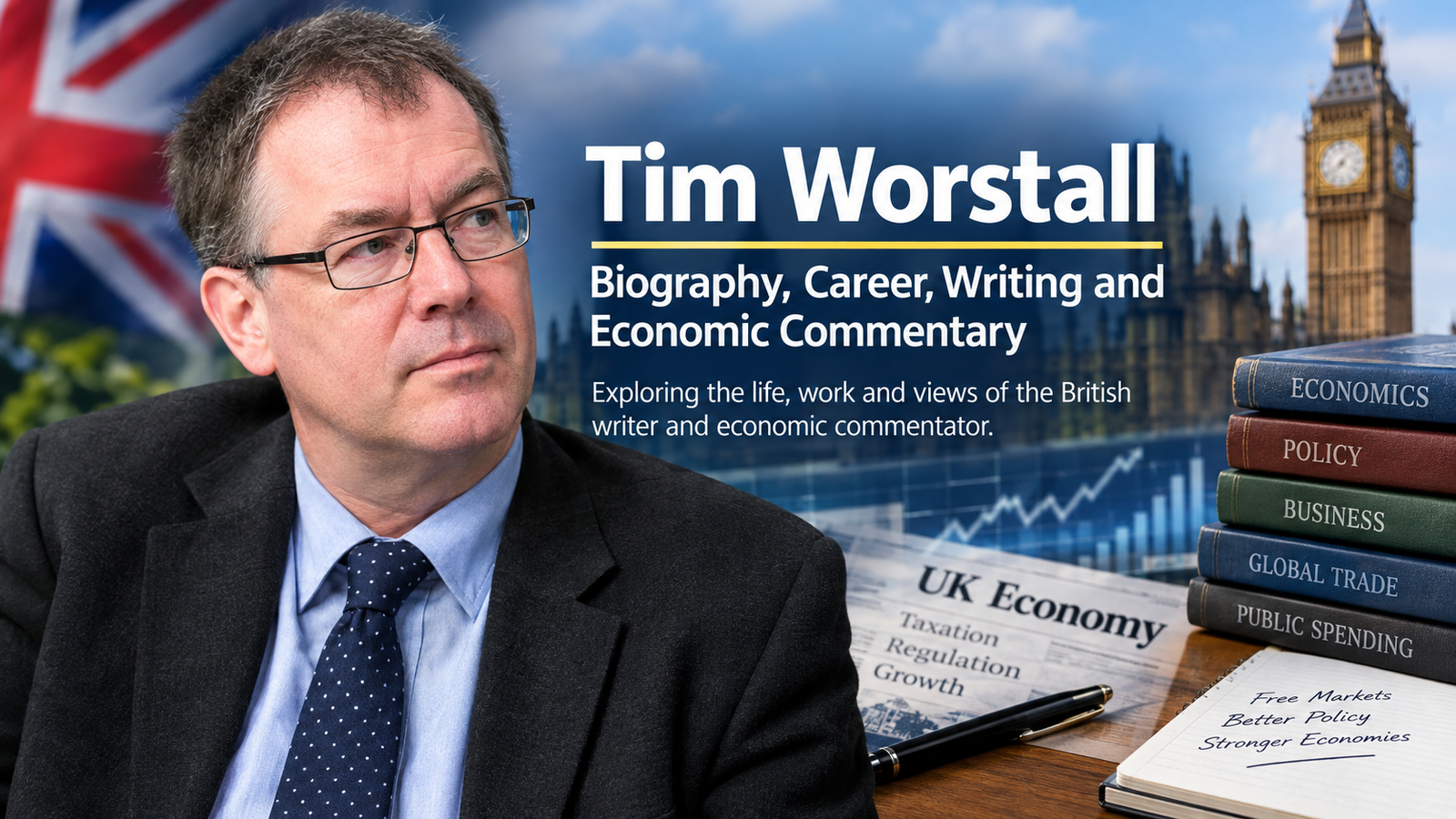
Tim Worstall is a British writer and economic commentator known for his direct views on taxation, government regulation, business, energy policy, and public spending. His writing frequently examines how political decisions affect markets, businesses, consumers, and the wider economy.
Over the years, Worstall has developed a recognizable voice in British economic and political commentary. His work often challenges popular assumptions and questions whether government policies achieve their intended results.
This article explores Tim Worstall’s background, writing career, economic perspective, major areas of commentary, and continuing relevance in public-policy discussions.
Who Is Tim Worstall?
Tim Worstall is a British economic writer and public-policy commentator. He has contributed to discussions about economics, politics, business, taxation, trade, energy, and regulation.
His work is generally associated with free-market economic thinking and a critical attitude toward excessive government intervention. Rather than focusing only on political intentions, he often examines the practical consequences of policies.
His commentary appeals to readers who want to understand the economic reasoning behind political decisions and current-affairs debates.
Tim Worstall’s Writing Career
Worstall became known through opinion writing and economic commentary published across online platforms and media outlets. His articles cover a broad range of subjects, including:
- Taxation and public spending
- Business regulation
- Energy and electricity policy
- Trade and globalization
- Climate economics
- Government intervention
- Industrial strategy
- Economic growth
- Political decision-making
His writing style is analytical, direct, and often argumentative. He frequently challenges established narratives and encourages readers to examine the evidence behind economic claims.
One of the central features of his work is the question of whether a policy’s real-world costs outweigh its expected benefits.
Tim Worstall’s Economic Perspective
Tim Worstall is commonly associated with free-market economics. This perspective emphasizes competition, private enterprise, market pricing, and efficient allocation of resources.
His commentary often raises questions such as:
- Does a new tax actually improve economic outcomes?
- Can regulation unintentionally harm businesses?
- What happens when governments interfere with market prices?
- Are political promises supported by reliable economic evidence?
- Do policies create unintended consequences?
Worstall’s work generally argues that policies should be evaluated according to measurable results rather than intentions alone.
Markets and Government Intervention
A recurring theme in his writing is the relationship between markets and government.
Regulation may be introduced to protect consumers, workers, or the environment. However, Worstall often examines whether regulations also increase costs, reduce competition, discourage investment, or make goods and services more expensive.
This makes his work relevant to readers interested in:
- Free-market economics
- Public policy
- Business efficiency
- Supply and demand
- Economic liberalism
- Government regulation
Tim Worstall and British Public Policy
Much of Tim Worstall’s commentary relates to political and economic issues in the United Kingdom. Britain regularly faces debates over taxation, public services, energy prices, housing, industrial policy, and economic growth.
Worstall’s writing often examines these issues from a critical economic perspective. He may question whether a policy is financially sustainable, whether it creates unintended consequences, or whether alternative solutions would be more effective.
His work helps readers look beyond political announcements and consider the economic mechanisms behind them.
Main Topics Covered by Tim Worstall
Taxation
Taxation is one of the most important areas of economic debate. Worstall has frequently discussed how taxes influence businesses, investment, consumer prices, and government revenue.
His analysis often considers whether higher taxes generate the expected income or whether they change behavior in ways that reduce their effectiveness.
Energy Policy
Energy policy is another major subject in British economic discussions. Electricity prices, renewable energy, energy security, and industrial costs can affect households and businesses alike.
Worstall’s commentary often focuses on the financial consequences of energy policies and whether government decisions make energy more affordable or less competitive.
Regulation
Businesses operate under employment laws, environmental standards, financial rules, and industry-specific regulations. While regulation can provide important protections, it may also create additional administrative costs.
Worstall frequently examines this balance and questions whether regulations deliver benefits proportionate to their economic costs.
Trade and Globalization
International trade is a major part of modern economics. Tariffs, trade restrictions, and protectionist policies can influence prices, jobs, production, and consumer choice.
Worstall’s perspective generally emphasizes the economic benefits of open markets and international competition while questioning policies that restrict trade.
Why Is Tim Worstall Notable?
Tim Worstall is notable for presenting economic arguments in an accessible and strongly opinionated style.
Economic policy can often be difficult for the general public to understand. His writing connects economic theory with practical consequences, such as the effect of taxes on prices, wages, investment, and business decisions.
Readers may follow his work because it provides:
- Alternative economic viewpoints
- Critical political analysis
- Free-market arguments
- Commentary on British current affairs
- Business and regulatory analysis
- Discussions of government policy
Tim Worstall’s Influence as a Commentator
Although Tim Worstall is primarily known as a writer rather than a mainstream political officeholder, his commentary contributes to wider discussions about economics and public policy.
Online writers and independent commentators play an important role in modern public debate. They challenge popular narratives, question official claims, and encourage readers to compare different interpretations of economic data.
Worstall’s work is particularly relevant to audiences interested in economic liberalism, British politics, and market-oriented policy analysis.
A Balanced View of His Commentary
As with any opinion writer, Tim Worstall’s arguments should be assessed critically. Economic questions are complex, and economists may disagree because they use different assumptions, data, and analytical frameworks.
Readers can compare his views with information from authoritative sources such as:
These resources help readers understand economic data and evaluate competing policy arguments.
Tim Worstall’s Writing Style
His writing is often characterized by:
- Direct and confident arguments
- Strong economic opinions
- Practical examples
- Criticism of political assumptions
- Focus on unintended consequences
- Market-oriented reasoning
- Attention to policy costs and incentives
His style is not always neutral or conventional. Instead, it is designed to challenge readers and encourage debate.
Frequently Asked Questions
Who is Tim Worstall?
Tim Worstall is a British writer and economic commentator known for discussing taxation, business, regulation, markets, and public policy.
What does Tim Worstall write about?
He writes about economics, British politics, taxation, energy, regulation, trade, business, and government policy.
Is Tim Worstall an economist?
He is primarily recognized as a writer and economic commentator rather than a traditional university-based academic economist.
What is Tim Worstall’s economic viewpoint?
His commentary is generally associated with free-market economics and skepticism toward unnecessary government intervention.
Why do people read Tim Worstall?
Readers follow his work for his direct opinions, economic analysis, policy criticism, and alternative perspectives on British political and economic issues.
Conclusion
Tim Worstall has become a recognizable voice in British economic and political commentary. Through his writing on taxation, regulation, energy, trade, and public policy, he encourages readers to examine the real-world consequences of government decisions.
Whether readers agree with his arguments or not, his work offers an alternative perspective on important economic debates. Understanding commentators such as Tim Worstall can help readers explore the different viewpoints shaping discussions about Britain’s economy and future.