Introduction
Fashion is more than clothing. It is a form of visual communication that reflects culture, creativity, technology, history, and changing social values. A well-designed fashion industry gallery brings these elements together and gives visitors an opportunity to explore how the world of fashion has evolved.
From historic garments and iconic runway collections to contemporary streetwear and digital fashion, galleries can preserve important moments while showing how designers continue to influence modern culture. They can also help students, fashion enthusiasts, photographers, researchers, and general audiences understand the creative process behind the clothes people wear.
In this guide, we explore what a fashion industry gallery is, what visitors can find inside one, why fashion exhibitions matter, and how fashion has changed from traditional craftsmanship to today’s digital industry.
What Is a Fashion Industry Gallery?
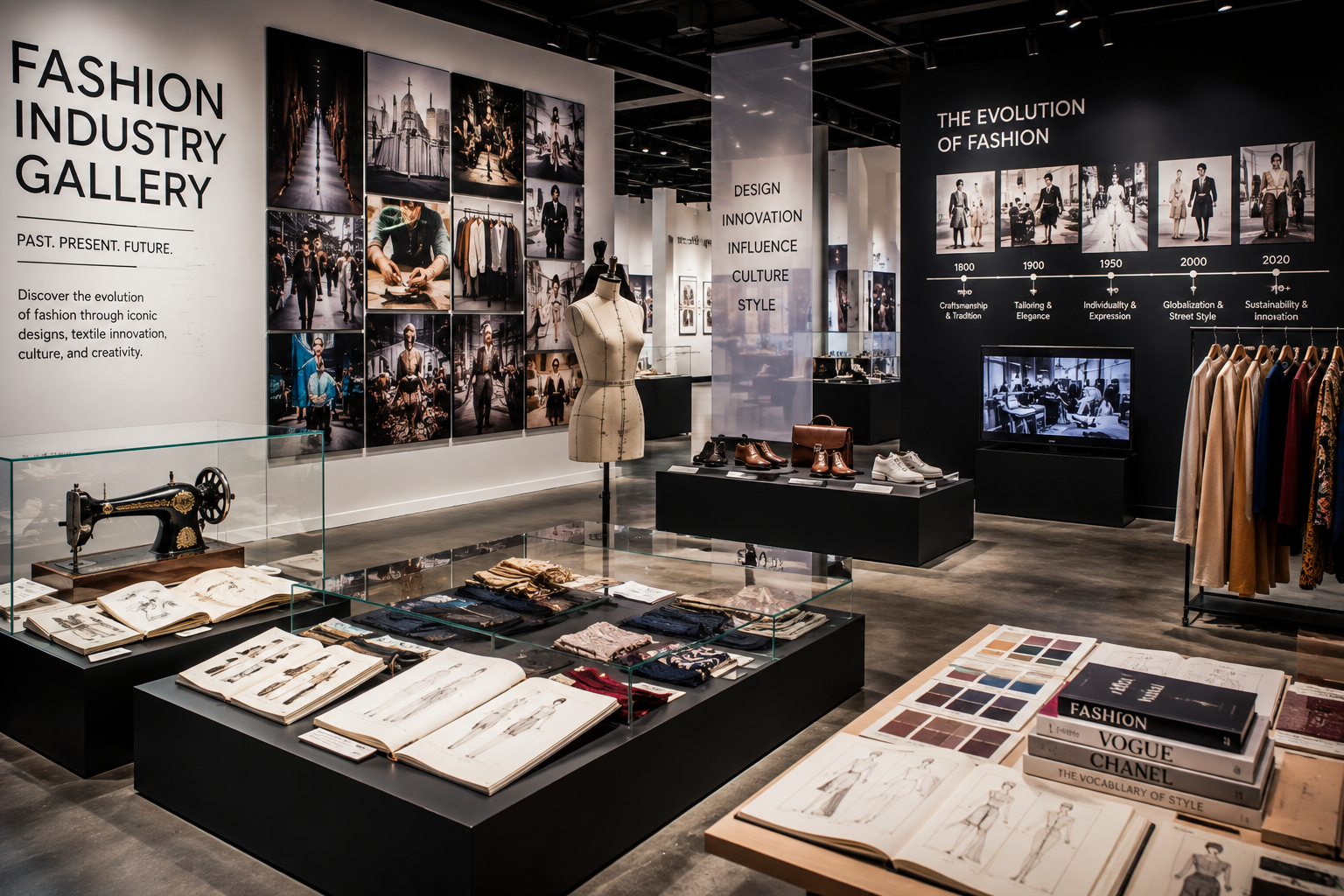
A fashion industry gallery is a curated collection or exhibition that presents clothing, accessories, photographs, designs, artwork, and other materials connected with fashion.
Unlike a conventional clothing store, a gallery focuses on education, history, creativity, and visual storytelling. Exhibits may be organized around a particular designer, period, fashion movement, country, cultural tradition, or technological development.
A typical gallery may include:
- Historic garments
- Designer collections
- Runway photography
- Fashion illustrations
- Shoes and accessories
- Textile samples
- Editorial photography
- Celebrity and red-carpet fashion
- Street-style photography
- Digital fashion concepts
- Behind-the-scenes design material
The goal is usually to tell a story rather than simply display products.
Why Fashion Galleries Matter
Fashion changes quickly, but galleries provide a way to preserve important moments. A garment that seems ordinary today may become historically significant decades later.
Fashion galleries are valuable because they:
- Preserve fashion history
Important garments and design movements can be documented for future generations. - Showcase creativity
Visitors can see how designers combine fabric, color, shape, texture, and technology. - Educate audiences
Exhibitions can explain the cultural and historical background behind particular styles. - Connect fashion with culture
Clothing often reflects identity, traditions, politics, music, and social change. - Inspire future designers
Students can study real examples of construction, styling, illustration, and creative direction.
What Can You See in a Fashion Industry Gallery?
Every gallery has a different theme, but many exhibitions combine historical pieces with contemporary fashion.
1. Historic Clothing
Historical garments provide a visual record of how people dressed during different periods. Visitors may see formalwear, traditional clothing, military-inspired styles, evening dresses, or everyday garments.
Details such as stitching, fabric selection, embroidery, buttons, and silhouettes can reveal how fashion production changed over time.
2. Designer Collections
Designer-focused exhibitions highlight the creative identity of influential fashion designers.
Instead of looking at a collection only as clothing, visitors can examine:
- Design concepts
- Fabric choices
- Construction techniques
- Color palettes
- Recurring visual themes
- Cultural references
- Evolution between collections
3. Fashion Photography
Photography plays a major role in fashion communication. A single photograph can influence how a collection is remembered by the public.
A gallery may display editorial photographs, runway images, portraits, advertising campaigns, or behind-the-scenes photography.
4. Fashion Illustration
Before a garment reaches the runway, designers often communicate ideas through sketches and illustrations.
Fashion illustration exhibitions can show the development of an idea from an initial drawing to a finished garment.
5. Accessories
Fashion is not limited to clothing. Accessories can completely change an outfit and often have their own cultural significance.
A fashion exhibition may feature:
- Handbags
- Shoes
- Jewelry
- Hats
- Belts
- Sunglasses
- Watches
- Headwear
The Evolution of the Fashion Industry
The fashion industry has transformed significantly over the centuries. Handmade garments once required extensive labor and specialized craftsmanship. Industrial manufacturing later made clothing available to larger audiences.
The rise of mass production changed how clothes were designed, manufactured, distributed, and marketed.
Later, television, magazines, photography, and international fashion shows helped designers reach global audiences. Today, social media, e-commerce, artificial intelligence, virtual fashion, and digital design are influencing the industry once again.
A modern fashion industry gallery can therefore tell a story that stretches from traditional craftsmanship to digital innovation.
Fashion Galleries and Cultural Heritage
Clothing often carries cultural meaning. Traditional garments can communicate information about geography, history, community, celebration, occupation, and social identity.
For this reason, responsible fashion exhibitions should provide accurate historical and cultural context.
Displaying an item without explaining its background can reduce its meaning. Strong exhibitions instead provide information about where an item originated, how it was produced, how it was used, and why it is significant.
This approach makes fashion exhibitions more informative and respectful.
The Role of Runway Fashion
Runway shows are one of the most recognizable parts of the fashion industry. Designers use them to present collections and communicate a particular creative vision.
Runway exhibitions can preserve:
- Collection themes
- Styling decisions
- Model presentation
- Set design
- Lighting
- Music
- Accessories
- Photography
A runway garment may look very different from everyday clothing because designers often use fashion shows as a form of artistic presentation.
Fashion Photography and Visual Storytelling
Photography has helped transform fashion into a global visual language.
A fashion photograph does more than show an outfit. Lighting, location, pose, composition, styling, and editing all contribute to the story.
For galleries, photography is particularly useful because it can document moments that no longer exist physically. A historic runway show, for example, can continue to be studied through photographs even when the original event is long gone.
Fashion and Technology
Technology is changing how fashion is created and presented.
Modern designers can use computer-aided design, 3D modeling, digital pattern development, virtual sampling, and other technologies during the creative process.
Digital exhibitions can also make fashion accessible to people who cannot visit a physical gallery.
Virtual galleries may offer:
- Online garment collections
- 360-degree exhibition spaces
- High-resolution garment photography
- Interactive timelines
- Designer interviews
- Video presentations
- Digital archives
This combination of fashion and technology is creating new ways to experience the industry.
Sustainability in Fashion Exhibitions
Sustainability has become an important topic within fashion. Clothing production can involve significant resource use, making questions about materials, manufacturing, waste, and product lifespan increasingly relevant.
A fashion exhibition can help visitors understand sustainability by presenting examples of:
- Recycled materials
- Upcycled garments
- Natural fibers
- Innovative textiles
- Repair techniques
- Slow-fashion concepts
- Circular design
Museums and galleries can also encourage discussion about how fashion can become more responsible without sacrificing creativity.
Fashion Industry Gallery vs. Fashion Museum
Although the terms can sometimes overlap, a gallery and museum may have different purposes.
| Feature | Fashion Industry Gallery | Fashion Museum |
|---|---|---|
| Main focus | Visual presentation and themes | Preservation and historical collections |
| Exhibits | Often curated around specific concepts | Often broader permanent collections |
| Audience | General visitors, creatives, students | Researchers, historians, general public |
| Experience | Highly visual and thematic | Educational and archival |
| Digital access | Often available | Increasingly available |
In practice, some institutions combine both approaches.
How to Appreciate a Fashion Exhibition
You do not need to be a fashion professional to understand an exhibition.
Start by asking simple questions:
- Why was this garment designed?
- What materials were used?
- What period does it represent?
- What cultural influences are visible?
- How was it constructed?
- Who was the intended audience?
- How does it compare with modern clothing?
Looking beyond the surface appearance can reveal much more about a garment.
The Future of Fashion Galleries
The future of fashion exhibitions is likely to become increasingly interactive.
Digital technology can allow visitors to explore garments from multiple angles, view historical timelines, and learn about construction techniques. Augmented and virtual reality may also provide new ways to experience collections.
At the same time, physical exhibitions will remain important because seeing actual garments provides information that photographs cannot always communicate. Texture, scale, construction, and material quality are easier to appreciate in person.
The strongest future exhibitions may combine physical objects with digital storytelling.
Frequently Asked Questions
What is a fashion industry gallery?
A fashion industry gallery is a curated exhibition or collection that showcases clothing, accessories, photographs, designs, textiles, and other materials related to fashion and its history.
What is usually displayed in a fashion gallery?
Fashion galleries can display historic garments, designer collections, accessories, fashion photography, illustrations, textiles, runway pieces, and digital fashion projects.
Why are fashion exhibitions important?
Fashion exhibitions preserve creative and cultural history while educating visitors about designers, clothing, craftsmanship, technology, and changing social trends.
Can fashion galleries be visited online?
Yes. Many institutions provide digital collections, virtual exhibitions, online archives, and high-resolution images that allow people to explore fashion remotely.
How does technology affect fashion galleries?
Technology can make exhibitions more interactive through digital archives, 3D visualization, virtual reality, augmented reality, online collections, and interactive timelines.
Are fashion galleries useful for fashion students?
Yes. They can help students study historical references, garment construction, materials, design concepts, styling, photography, and the development of fashion movements.
Conclusion
A fashion industry gallery is more than a collection of beautiful clothing. It is a visual record of creativity, culture, craftsmanship, technology, and social change.
From historic garments and designer collections to runway photography and digital fashion, exhibitions help audiences understand why particular styles became important and how the industry continues to evolve.
Whether you are a fashion student, designer, photographer, researcher, or simply interested in style, exploring fashion exhibitions can provide valuable inspiration and a deeper understanding of the industry.
As fashion continues to combine traditional craftsmanship with technology and sustainable design, galleries will remain an important place for preserving the past while presenting ideas about the future.
Quick Facts / Featured Snippet Section
A fashion industry gallery showcases clothing, accessories, photography, textiles, designer collections, historical garments, and other visual materials connected to fashion. Its purpose is to preserve fashion history, educate visitors, celebrate creativity, and explain the cultural and technological development of the fashion industry.