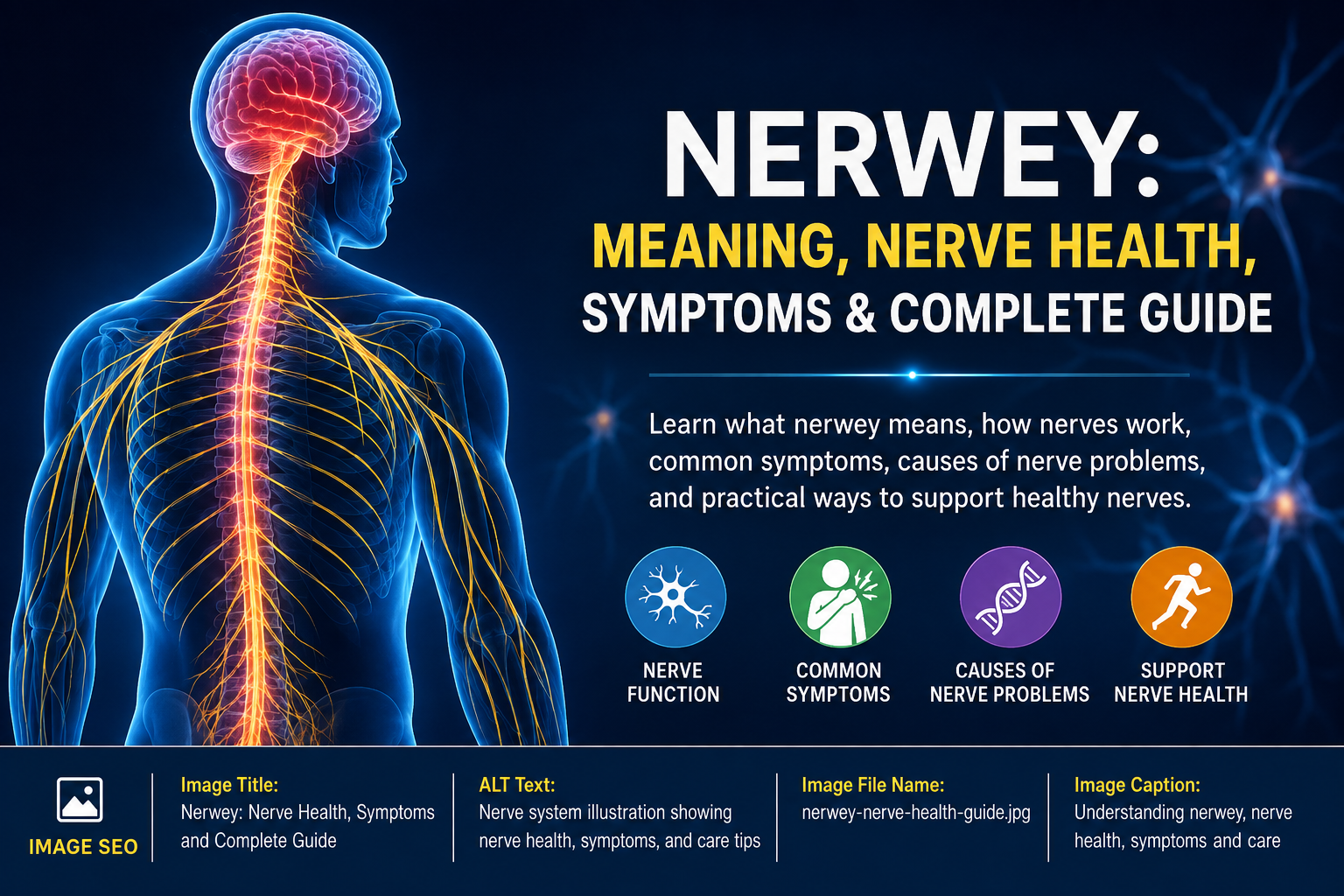
What Is Nerwey?
The word nerwey is often used when people are looking for information about nerves, nerve-related symptoms, or nerve health. Nerves are an essential part of the human body because they allow the brain and spinal cord to communicate with muscles, organs, and other tissues.
Your nervous system helps you feel sensations such as touch, temperature, pressure, and pain. It also controls many automatic functions, including breathing, digestion, and heart activity.
Understanding how nerves work can make it easier to recognize symptoms that may require professional medical advice.
How Do Nerves Work?
Nerves act like communication pathways throughout the body. They carry signals between the brain, spinal cord, and different parts of the body.
There are three broad types of nerves and nerve functions:
- Sensory nerves – carry information from the body to the brain.
- Motor nerves – send signals from the brain and spinal cord to muscles.
- Autonomic nerves – help control automatic functions such as digestion and blood pressure.
The nervous system is extremely complex, which is why problems affecting nerves can cause many different symptoms.
For reliable general health information, the NHS guide to the nervous system is a useful external resource.
Common Symptoms of Nerve Problems
Nerve-related problems can produce different symptoms depending on which nerves are affected.
Common symptoms may include:
- Tingling or pins and needles
- Numbness
- Burning sensations
- Sharp or shooting pain
- Muscle weakness
- Increased sensitivity to touch
- Problems with balance or coordination
- Reduced ability to feel temperature
Some symptoms can be temporary. For example, sitting in one position for too long can temporarily cause pins and needles. However, persistent or worsening symptoms should be discussed with a qualified healthcare professional.
What Can Cause Nerve Problems?
There are many possible causes of nerve symptoms. Some are temporary, while others may require medical treatment.
Common causes can include:
Diabetes
High blood sugar over a long period can damage nerves. This condition is commonly known as diabetic peripheral neuropathy.
Vitamin Deficiency
Certain vitamins are important for normal nerve function. In particular, vitamin B12 deficiency can sometimes contribute to neurological symptoms.
Physical Injury
An injury or pressure on a nerve can cause pain, numbness, or weakness in the area supplied by that nerve.
Certain Medicines
Some medicines can affect nerves as a side effect. Anyone experiencing new symptoms after starting a medicine should speak with their doctor rather than stopping prescribed treatment independently.
Alcohol
Long-term excessive alcohol consumption can contribute to nerve damage and other health problems.
Other Medical Conditions
A range of medical conditions can affect the nervous system. The underlying cause is important because treatment depends on the specific problem.
How Can You Support Nerve Health?
There is no single method that guarantees perfect nerve health, but several healthy habits can support overall nervous-system function.
Eat a Balanced Diet
A varied diet containing vegetables, fruits, whole grains, protein sources, and other nutrient-rich foods can help provide the nutrients the body needs.
Avoid taking high-dose vitamin supplements without professional advice, particularly if you suspect a deficiency.
Stay Physically Active
Regular physical activity supports circulation, muscle strength, balance, and overall health. Choose activities that are appropriate for your fitness level.
Manage Blood Sugar
For people with diabetes, maintaining blood glucose within the recommended range is an important part of reducing the risk of nerve complications.
Avoid Excessive Alcohol
Limiting alcohol can support overall health and may reduce some risks associated with long-term excessive drinking.
Protect Your Feet
People with reduced sensation in their feet should take particular care to check for cuts, blisters, burns, or other injuries because reduced sensation can make injuries harder to notice.
When Should You See a Doctor?
You should consider speaking with a healthcare professional if numbness, tingling, burning pain, weakness, or other unusual nerve symptoms:
- Continue for a long time
- Keep returning
- Become worse
- Affect walking or balance
- Interfere with daily activities
- Appear suddenly or severely
Sudden weakness, difficulty speaking, facial drooping, or other possible signs of a stroke require urgent medical attention.
For additional health information, you can also consult MedlinePlus, a health information service from the U.S. National Library of Medicine.
Nerwey and Nerve Health: Key Differences
It is useful to remember that “nerwey” is not a standard medical diagnosis. If you have seen or heard this term online, it may be referring generally to nerves or nerve-related symptoms.
A medical professional can assess your symptoms and determine whether they are related to a nerve problem or another condition.
| Symptom | Possible Nerve-Related Explanation |
|---|---|
| Tingling | Irritation or dysfunction of a nerve |
| Numbness | Reduced nerve sensation |
| Burning pain | Can occur with some forms of neuropathy |
| Muscle weakness | May involve motor nerves |
| Shooting pain | Can occur when a nerve is irritated |
| Balance problems | Can have several possible causes, including neurological issues |
This table is for general information only and does not provide a diagnosis.
Frequently Asked Questions About Nerwey
What does nerwey mean?
Nerwey is commonly used as a search term related to nerves or nerve health. It is not generally recognized as a specific medical diagnosis.
What are common signs of nerve problems?
Common signs can include numbness, tingling, burning pain, shooting pain, weakness, and changes in sensation.
Can nerve problems be treated?
Treatment depends on the underlying cause. A healthcare professional may recommend treating the underlying condition, changing medicines where appropriate, physical therapy, or other treatments.
Can vitamin deficiency affect nerves?
Yes. Some vitamin deficiencies, particularly vitamin B12 deficiency, can affect the nervous system. Testing may be needed to determine whether a deficiency is present.
Should persistent tingling be checked?
Yes. Persistent or recurring tingling should be discussed with a healthcare professional, especially when it occurs with weakness, pain, numbness, or balance problems.
Final Thoughts
The term nerwey is generally associated with nerves and nerve health rather than a specific medical condition. Nerves are essential communication pathways that connect the brain and spinal cord with the rest of the body.
Maintaining a balanced lifestyle, managing underlying health conditions, staying active, and seeking professional advice when unusual symptoms persist can all play an important role in protecting overall health.
For more useful information across different topics, visit HeadLine.Co.Uk.
Medical disclaimer: This article is for general informational purposes only and should not be used as a substitute for professional medical advice, diagnosis, or treatment.