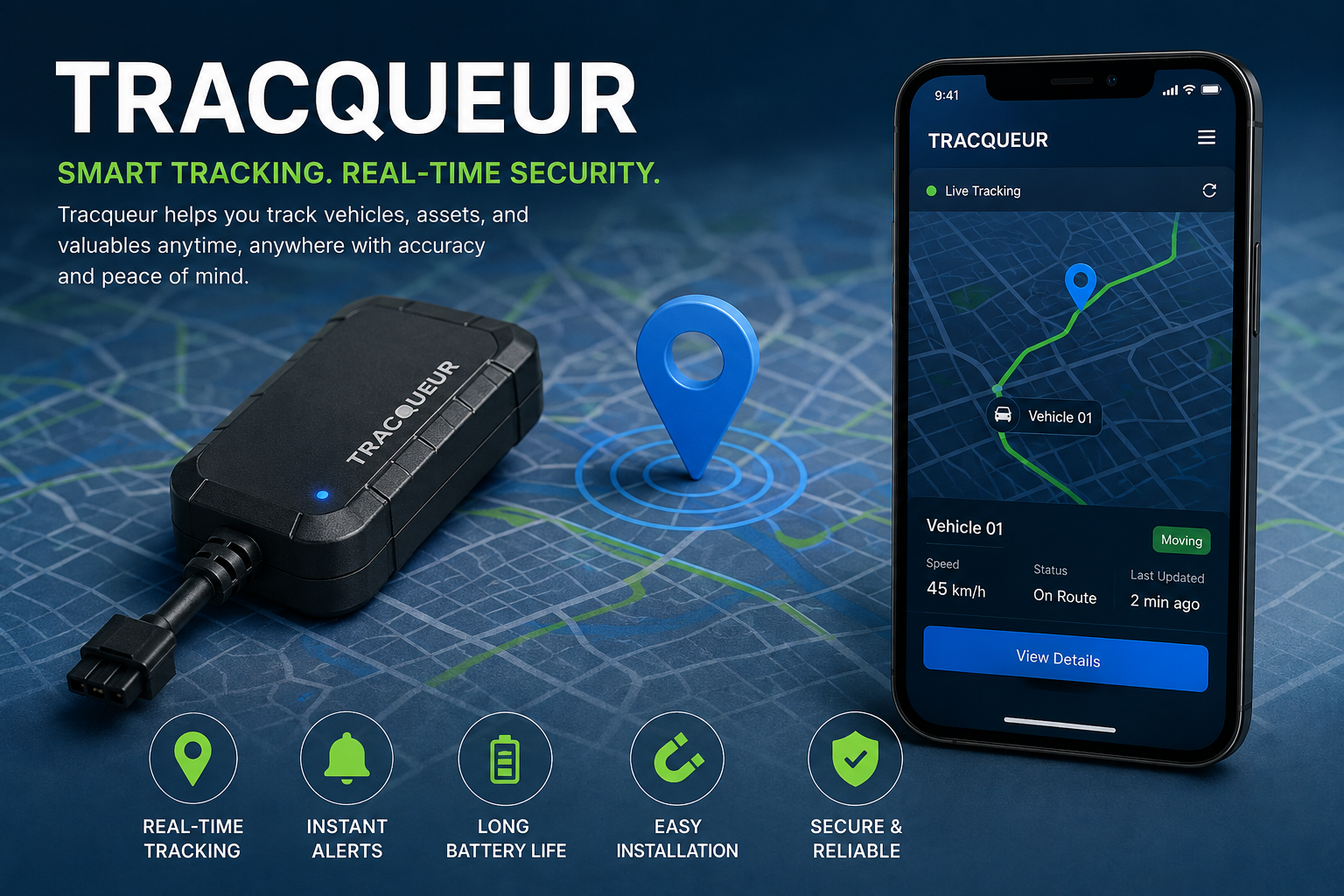
What Is Tracqueur?
The word tracqueur is commonly associated with a tracker or tracking system. In simple terms, a tracqueur is something designed to help monitor, locate, or track the position or movement of an object, vehicle, person, or other asset.
Depending on the context, a tracqueur can refer to a physical tracking device, GPS-based technology, or a digital tracking service. Modern tracking systems can use technologies such as GPS, cellular networks, Bluetooth, Wi-Fi, or a combination of these technologies.
Tracking technology has become increasingly common because it can help people manage vehicles, valuable belongings, deliveries, and other assets more efficiently.
How Does a Tracqueur Work?
A typical GPS-based tracqueur works by determining its location and transmitting that information to an associated application or online platform.
The basic process usually involves:
- Location detection – The device determines its approximate or precise location.
- Data processing – The tracking device processes location information.
- Communication – Depending on the technology, the device sends information through a mobile network, Wi-Fi, Bluetooth, or another connection.
- User access – The location or tracking information can then be viewed through an application or web dashboard.
Not every tracker works in exactly the same way. Some devices require a SIM card and mobile network, while others rely on Bluetooth or nearby smartphones.
Common Uses of a Tracqueur
A tracqueur can have several practical applications.
Vehicle Tracking
GPS trackers are widely used for cars, motorcycles, vans, trucks, and other vehicles. Vehicle tracking can help owners monitor journeys, identify the location of a vehicle, and improve fleet management.
For businesses, tracking can also provide useful information about routes, vehicle utilisation, and delivery operations.
Asset Tracking
Businesses can use tracking technology to monitor valuable equipment and assets. This can be useful for tools, machinery, containers, and other movable items.
Personal Belongings
Small Bluetooth or GPS trackers can help users locate items such as bags, luggage, keys, or other valuable belongings.
Logistics and Deliveries
Tracking technology can also be used in logistics. Companies can monitor shipments and vehicles as they move between locations.
GPS Tracker vs Bluetooth Tracker
Although both can be described as tracking devices, GPS and Bluetooth trackers work differently.
| Feature | GPS Tracker | Bluetooth Tracker |
|---|---|---|
| Main technology | GPS + network | Bluetooth |
| Long-distance tracking | Usually yes | Limited |
| Mobile network | Often required | Usually not |
| Typical range | Potentially worldwide with network coverage | Relatively short range |
| Battery consumption | Often higher | Usually lower |
| Common use | Vehicles and assets | Keys, bags and personal items |
The right option depends on what you want to track and where the item will normally be located.
Benefits of Using a Tracqueur
Tracking technology can provide several benefits when used appropriately.
Better Visibility
A tracker can provide information about where an asset or vehicle is located, giving users greater visibility.
Improved Asset Management
Businesses can use tracking information to understand how equipment and vehicles are being used.
Convenience
Small trackers can make it easier to find misplaced belongings.
Fleet Management
For companies operating multiple vehicles, tracking systems can provide useful information for managing routes and operations.
Potential Security Benefits
Tracking can potentially assist in locating a tracked asset if it is lost or stolen. However, a tracker should not be considered a guarantee against theft.
Limitations of Tracqueur Technology
Despite its advantages, tracking technology also has limitations.
Signal availability: GPS and cellular-based systems may perform differently depending on the environment and network coverage.
Battery life: Portable trackers need power, and frequent location updates can reduce battery life.
Accuracy: Location accuracy can vary depending on the device, surrounding buildings, satellite visibility, and technology being used.
Cost: Some GPS trackers require a purchase price plus an ongoing subscription or mobile-data cost.
Privacy: Tracking another person without appropriate knowledge, permission, or legal authority can create serious privacy and legal concerns.
Is a Tracqueur Accurate?
The accuracy of a tracqueur depends on the technology and environment.
GPS-based devices can provide relatively accurate location information outdoors when they have good access to satellite signals. Buildings, underground areas, dense urban environments, and other obstacles can affect performance.
Bluetooth trackers operate differently and may depend on nearby compatible devices or phones to help determine an item’s location.
For this reason, users should always check the manufacturer’s stated specifications rather than assuming every tracker provides the same level of accuracy.
Privacy and Responsible Tracking
Privacy should be an important consideration when using any tracking technology.
A tracker should generally be used for legitimate purposes, such as tracking your own vehicle, belongings, business assets, or equipment. Tracking another person without their knowledge or lawful authority may violate privacy laws or other regulations depending on the circumstances.
For information about data protection and privacy principles, users can consult the UK Information Commissioner’s Office (ICO).
It is also important to read the privacy policy of any tracking application or service before providing personal information.
How to Choose the Right Tracqueur
Before buying a tracking device, consider these factors:
- Tracking range
- GPS or Bluetooth technology
- Battery life
- Mobile network compatibility
- Real-time tracking requirements
- Monthly subscription fees
- Water and weather resistance
- Size and portability
- Mobile app quality
- Privacy and security features
For example, someone looking for a tracker for a vehicle may need GPS and cellular connectivity, while someone trying to find keys may prefer a compact Bluetooth tracker.
Tracqueur and Modern Tracking Technology
Modern tracking technology is becoming more sophisticated. Many devices now combine GPS, cellular connectivity, Bluetooth, smartphone applications, and cloud-based services.
This allows users to access tracking information from almost anywhere with an internet connection.
The technology is particularly useful in areas such as transportation, logistics, asset management, and personal item recovery.
For general information about GPS technology, the U.S. Space Force GPS.gov resource provides useful background information about the Global Positioning System.
Frequently Asked Questions
What does tracqueur mean?
Tracqueur generally refers to a tracker or tracking system used to monitor the location or movement of something.
Is a tracqueur the same as a GPS tracker?
Not necessarily. A tracqueur can refer broadly to tracking technology, while a GPS tracker specifically uses GPS technology to determine location.
Can a tracqueur track a car?
Yes, suitable GPS tracking devices can be installed or placed in vehicles to provide location information and other tracking data.
Does every tracqueur need a SIM card?
No. Some GPS trackers use cellular networks and therefore require a SIM or equivalent connectivity, while Bluetooth trackers can operate without a traditional mobile-data connection.
Are tracqueurs legal?
Using a tracker on your own property or assets is generally different from secretly tracking another person. Laws vary by country and situation, so users should consider applicable privacy and surveillance laws before using tracking technology.
Final Thoughts
A tracqueur can be understood as a tracking solution designed to help locate or monitor an object, vehicle, asset, or other item. Modern trackers can use GPS, Bluetooth, cellular networks, and other technologies to provide useful location information.
Choosing the right tracker depends on your specific requirements, including range, accuracy, battery life, connectivity, cost, and privacy. Before purchasing one, compare the technical specifications and make sure the intended use complies with applicable laws and privacy requirements.