What Is Babybelletje?
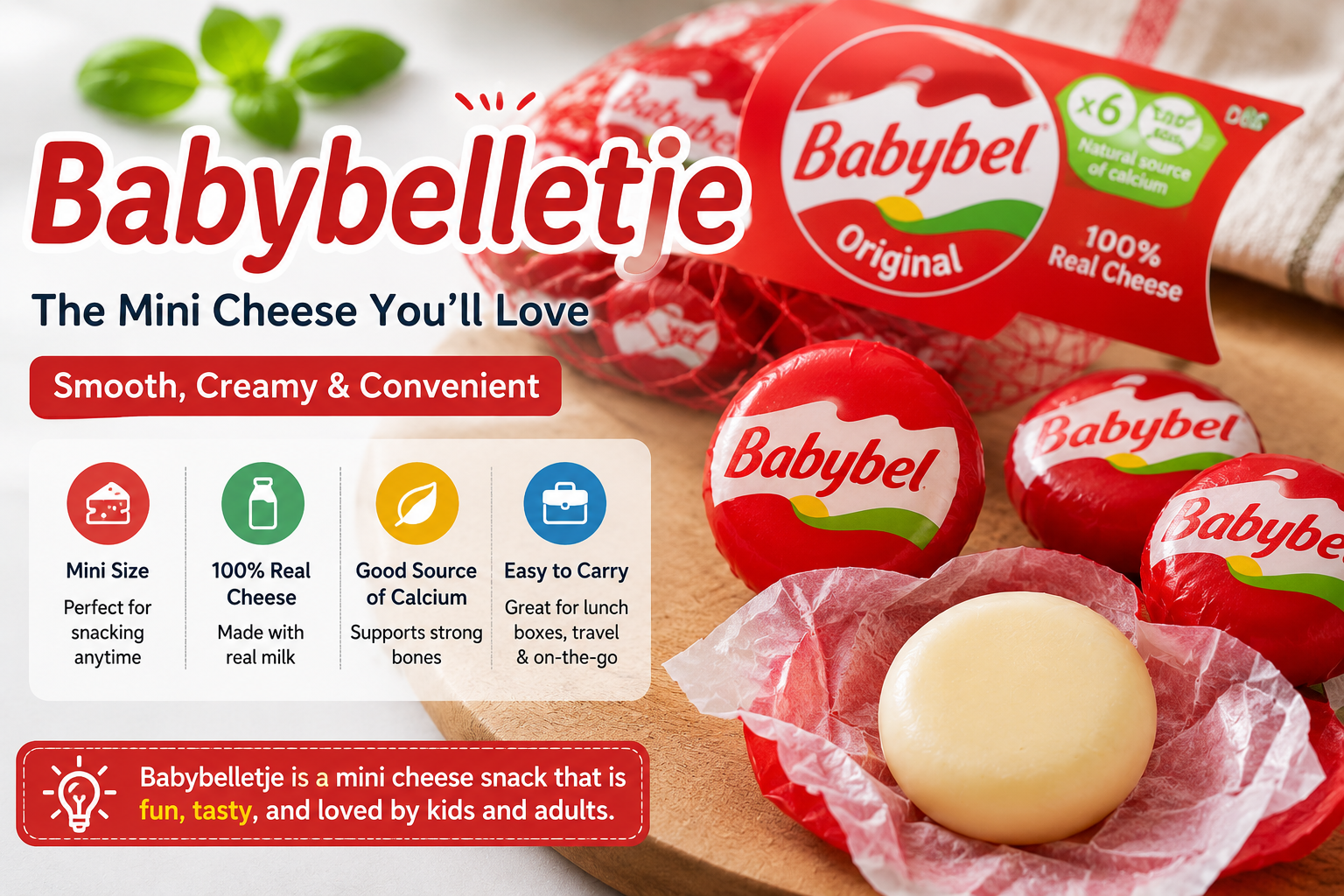
Babybelletje is a term that may be used to describe a small Babybel-style cheese or mini cheese snack. Babybel is widely recognized for its individually wrapped, round cheese portions covered in a distinctive wax coating.
These small cheese portions are designed to be convenient and easy to enjoy. They can be eaten at home, packed in a lunchbox, taken to work, or enjoyed as a quick snack between meals.
A typical Babybel product can contain cheese, milk-derived ingredients, salt, and other ingredients depending on the specific variety and market. Because recipes can differ between products and countries, checking the package is the best way to confirm the exact ingredients.
Why Is Babybelletje Popular?
The main attraction of a mini cheese snack is convenience. Instead of cutting a large block of cheese, an individual portion is already prepared for eating.
Babybel products are also recognizable because of their round shape and wax coating. The wax helps protect the cheese and gives the product its familiar appearance.
For people who enjoy cheese but want a simple snack, babybelletje can be an appealing option.
Key Features
- Small individual cheese portion
- Convenient for snacks and lunchboxes
- Recognizable round shape
- Available in different varieties and formats
- Easy to pair with fruit, crackers, or vegetables
- Suitable for many everyday snacking occasions
Babybelletje Cheese: What Does It Taste Like?
The flavor depends on the specific Babybel variety. The Original version is generally mild and creamy, making it accessible to people who prefer a less intense cheese flavor.
Its texture is also part of the appeal. The cheese is firm enough to hold its shape but soft enough to bite into easily.
Because individual varieties can have different characteristics, consumers should check the product label when looking for a particular flavor or texture.
How Is Babybelletje Made?
Cheese production generally begins with milk. The milk is processed and transformed into cheese through controlled fermentation and cheesemaking processes.
The resulting cheese is then shaped into individual portions. Babybel is particularly recognizable because its portions are traditionally protected by a wax coating.
The wax is not intended to be eaten. It should be removed before consuming the cheese.
The exact manufacturing process and ingredients can vary by product, so the packaging remains the most reliable source for product-specific information.
Babybelletje Ingredients
If you are checking whether babybelletje fits your diet, always read the ingredient label on the exact product you purchase.
Depending on the variety, cheese products may contain ingredients such as:
- Milk
- Salt
- Cheese cultures
- Microbial or animal-derived enzymes
- Other ingredients used in specific varieties
Ingredient lists can change, and different countries may sell slightly different formulations. This is especially important for people with milk allergies, dietary restrictions, or specific nutritional requirements.
Is Babybelletje a Healthy Snack?
Cheese can provide useful nutrients, including protein and calcium. A small cheese portion can therefore be part of a balanced diet.
However, whether babybelletje is a suitable snack depends on the person’s overall diet, nutritional needs, and portion size.
Cheese can also contain saturated fat and sodium, so moderation is important. Rather than considering any individual food automatically “healthy” or “unhealthy,” it is more useful to look at the complete eating pattern.
For children and adults, a mini cheese portion can be combined with other nutritious foods to create a more balanced snack.
Babybelletje Nutrition
The nutritional values of Babybel products vary according to the variety and serving size.
A product label may provide information about:
| Nutrient | Why It Matters |
|---|---|
| Protein | Helps support normal body tissues |
| Calcium | Important for normal bones and teeth |
| Fat | Provides energy |
| Saturated fat | Should be consumed in moderation |
| Salt | Important to monitor as part of the overall diet |
| Energy | Shows the calories provided by the serving |
For accurate numbers, always use the nutrition panel on the specific package because values may differ between varieties and countries.
Babybelletje as a Lunchbox Snack
One of the simplest ways to enjoy a mini cheese portion is in a lunchbox.
A balanced lunchbox could contain:
- Babybel or another mini cheese portion
- Apple slices or berries
- Whole-grain crackers
- Cucumber or carrot sticks
- Water or another suitable drink
Combining cheese with fruit and vegetables adds variety to the meal while keeping preparation simple.
Babybelletje Snack Ideas
A mini cheese portion does not have to be eaten alone. There are many easy ways to include it in a snack.
Cheese and Fruit
Pair a mini cheese with apple, grapes, pear, or berries. The fresh fruit provides a sweet contrast to the savory cheese.
Cheese and Crackers
Whole-grain crackers can add crunch and make a simple cheese portion more filling.
Cheese and Vegetables
Cucumber, carrots, tomatoes, and bell peppers can work well alongside mild cheese.
Quick School Snack
A small cheese portion, fruit, and a few whole-grain crackers can make a convenient lunchbox combination.
How to Store Babybelletje
Storage instructions should always follow the manufacturer’s packaging.
Most refrigerated cheese products need to remain chilled until they are ready to eat. Avoid leaving perishable cheese at room temperature for extended periods.
If you are packing babybelletje for school, work, or travel, using an insulated lunch bag with an appropriate cold pack can help keep refrigerated foods at a safe temperature.
Can You Eat the Wax?
No. The wax coating surrounding Babybel cheese is designed to protect the cheese and should be removed before eating.
The edible part is the cheese inside the wrapper and wax.
If you are serving it to a child, make sure the wax and packaging are completely removed before the cheese is eaten.
Babybelletje for Kids
Mini cheese portions can be convenient for children because they are small, easy to handle, and simple to pack.
Parents should still consider the child’s overall diet, allergies, age, and nutritional needs. Young children should also be supervised while eating appropriate foods.
For children with a milk allergy or other dietary restriction, check the product’s ingredient and allergen information carefully.
Is Babybelletje Vegetarian?
This depends on the specific product and the ingredients used in its production.
Some cheeses may use enzymes that are not suitable for every vegetarian diet. Therefore, people following a vegetarian diet should check the packaging for vegetarian certification or the manufacturer’s current ingredient information.
Do not assume that every cheese variety has the same formulation.
Babybelletje vs. Regular Cheese
The biggest difference is usually portion size and convenience rather than the basic concept of cheese.
| Feature | Babybelletje / Mini Cheese | Large Cheese Block |
| Portion | Individually sized | Must be cut |
| Convenience | Very high | Moderate |
| Lunchbox use | Easy | Less convenient |
| Packaging | Individual | Larger package |
| Serving control | Simple | Requires portioning |
| Storage | Refrigerated | Refrigerated |
A large block can be more practical for cooking and family meals, while individually portioned cheese can be convenient for snacking.
What Can You Pair With Babybelletje?
Babybelletje can work with many everyday foods. Good pairings include:
- Apples
- Grapes
- Pears
- Crackers
- Whole-grain bread
- Cucumbers
- Carrots
- Cherry tomatoes
- Nuts, where appropriate
- Dried fruit
The best combination depends on whether you are creating breakfast, a lunchbox, an afternoon snack, or a small picnic meal.
Buying Babybelletje
When purchasing a mini cheese product, look at more than the front of the package.
Check:
- Product variety – Different versions can have different flavors.
- Ingredients – Useful for allergy and dietary considerations.
- Nutrition information – Compare serving size, protein, fat, and salt.
- Storage instructions – Refrigerated products need appropriate storage.
- Best-before information – Check the date before purchasing.
- Packaging condition – Avoid products with damaged packaging.
These simple checks can help you choose the product that best fits your needs.
Frequently Asked Questions About Babybelletje
What is babybelletje?
Babybelletje can refer to a small Babybel-style cheese snack. Babybel is known for individually portioned round cheeses protected by a wax coating.
Is babybelletje real cheese?
Babybel products are cheese products, but the exact ingredients depend on the variety. Always check the product label for the specific version you are buying.
Can you eat the Babybel wax?
No. The wax coating should be removed before eating the cheese.
Is babybelletje good for lunchboxes?
Yes, an individually portioned mini cheese can be convenient for lunchboxes when kept properly refrigerated.
Does babybelletje contain calcium?
Cheese naturally provides calcium, but the exact nutritional amount depends on the product and serving size. Check the nutrition label for precise information.
Can children eat Babybel cheese?
Many children enjoy mini cheese snacks, but parents should consider the child’s age, dietary needs, allergies, and appropriate serving size.
Does Babybelletje need refrigeration?
Follow the storage instructions printed on the package. Refrigerated cheese should generally be kept chilled until consumption.
Is babybelletje vegetarian?
It depends on the particular variety and the enzymes or ingredients used. Check the product packaging for current vegetarian information.
Final Thoughts
Babybelletje is best understood in the context of small, individually portioned Babybel-style cheese snacks. Its compact size, recognizable shape, and convenient packaging make it suitable for lunchboxes, quick snacks, picnics, and everyday eating.
Cheese can provide nutrients such as protein and calcium, but nutritional values differ between products. For that reason, the product label should always be the final reference for ingredients, allergens, nutrition, and storage instructions.
Whether you enjoy it with fruit, crackers, or vegetables, a mini cheese portion can be an easy addition to a varied and balanced