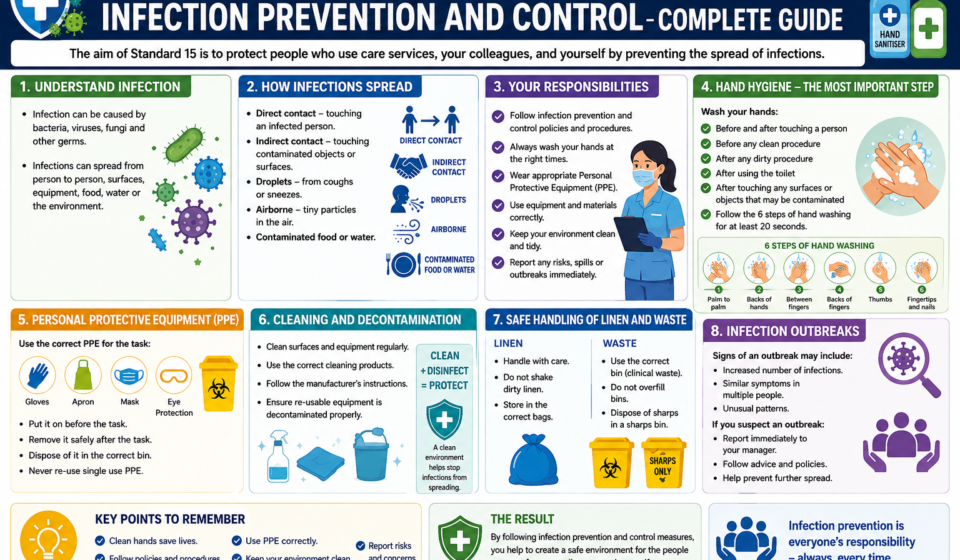

Care Certificate Standard 15: Infection Prevention and Control – Complete Guide
Discover everything about Care Certificate Standard 15: Infection Prevention and Control, including its purpose, principles, responsibilities, benefits, best practices, and FAQs. Learn why infection prevention and control is essential in health and social care settings.
Care Certificate Standard 15: Infection Prevention and Control
Introduction
Care Certificate Standard 15: Infection Prevention and Control is one of the 15 standards included in the Care Certificate framework for health and social care workers in the UK. This standard focuses on preventing the spread of infections, protecting individuals from harmful microorganisms, and maintaining a safe, clean, and hygienic care environment.
Every healthcare worker has a responsibility to follow infection prevention procedures, use personal protective equipment (PPE) correctly, maintain hand hygiene, and safely handle waste and equipment. Following these practices helps reduce healthcare-associated infections (HCAIs) and improves patient safety.
What is Care Certificate Standard 15: Infection Prevention and Control?
Care Certificate Standard 15 is designed to ensure that healthcare and social care workers understand how infections spread and know the practical steps required to prevent and control them.
The standard teaches workers how to protect themselves, colleagues, patients, and visitors by following evidence-based infection control practices.
Vision
The vision of Care Certificate Standard 15 is to create safe healthcare environments where infections are prevented, risks are minimized, and high-quality care is delivered to every individual.
Mission
The mission of Care Certificate Standard 15 includes:
- Preventing the spread of infections.
- Promoting excellent hand hygiene.
- Ensuring the correct use of Personal Protective Equipment (PPE).
- Maintaining clean and safe healthcare environments.
- Protecting patients, staff, and visitors.
- Supporting safe and effective healthcare practices.
Key Principles of Infection Prevention and Control
1. Hand Hygiene
Proper handwashing is the most effective way to prevent the spread of infection.
Healthcare workers should wash or sanitize their hands:
- Before and after patient contact.
- Before preparing or serving food.
- After using the toilet.
- After removing gloves.
- After contact with bodily fluids.
- Before carrying out clean or sterile procedures.
2. Personal Protective Equipment (PPE)
Healthcare professionals should use appropriate PPE based on the level of risk.
Common PPE includes:
- Disposable gloves
- Face masks
- Aprons
- Eye protection
- Protective gowns
PPE helps reduce the risk of cross-contamination between patients and healthcare workers.
3. Cleaning and Disinfection
Keeping healthcare environments clean is essential for infection control.
This includes:
- Cleaning patient rooms.
- Disinfecting medical equipment.
- Sanitizing frequently touched surfaces.
- Following approved cleaning procedures.
4. Safe Waste Disposal
Clinical waste must be disposed of safely to prevent contamination.
Examples include:
- Sharps disposal.
- Infectious waste bags.
- Clinical waste bins.
- Safe disposal of contaminated materials.
5. Safe Handling of Equipment
Medical equipment should always be:
- Cleaned after use.
- Sterilized when necessary.
- Stored correctly.
- Checked regularly for cleanliness.
6. Reporting Infection Risks
Healthcare workers should immediately report:
- Suspected outbreaks.
- Needle-stick injuries.
- Exposure to infectious diseases.
- Unsafe infection control practices.
Prompt reporting helps prevent wider transmission.
Responsibilities of Healthcare Workers
Workers following Care Certificate Standard 15 should:
- Maintain excellent personal hygiene.
- Follow workplace infection control policies.
- Wear PPE correctly.
- Dispose of waste safely.
- Report hazards immediately.
- Protect vulnerable individuals.
- Complete infection prevention training regularly.
Benefits
Following Care Certificate Standard 15 provides many advantages:
- Reduces healthcare-associated infections (HCAIs).
- Improves patient safety.
- Protects healthcare staff.
- Prevents disease outbreaks.
- Promotes high-quality care.
- Ensures compliance with healthcare regulations.
- Builds trust between patients and healthcare providers.
Why Care Certificate Standard 15 Stands Out
Infection Prevention and Control is one of the most important standards in healthcare because it directly protects lives. By following simple but effective infection control measures, healthcare workers can significantly reduce the spread of harmful microorganisms and create safer environments for everyone.
This standard also supports legal compliance, professional responsibility, and continuous improvement in health and social care services.
Future Developments
Future improvements in infection prevention and control may include:
- Advanced infection monitoring technologies.
- Improved PPE and protective equipment.
- Enhanced staff training programmes.
- Digital infection reporting systems.
- Greater focus on antimicrobial resistance (AMR).
- Increased use of evidence-based infection control practices.
Frequently Asked Questions
What is Care Certificate Standard 15?
Care Certificate Standard 15 focuses on Infection Prevention and Control, teaching healthcare workers how to prevent infections and maintain safe healthcare environments.
Why is infection prevention important?
It helps protect patients, healthcare workers, and visitors from infectious diseases while reducing the spread of harmful microorganisms.
What is the most effective way to prevent infection?
Good hand hygiene is considered the most effective method for preventing the spread of infection.
What is PPE?
Personal Protective Equipment (PPE) includes gloves, masks, aprons, gowns, and eye protection used to reduce the risk of infection.
Who should follow Care Certificate Standard 15?
All health and social care workers, including Healthcare Assistants, Support Workers, Nursing Assistants, and Care Workers, should follow this standard.
Conclusion
Care Certificate Standard 15: Infection Prevention and Control is a vital part of delivering safe, effective, and person-centred care. It provides healthcare workers with the knowledge and practical skills needed to prevent infections, protect vulnerable individuals, and maintain high standards of hygiene in health and social care settings. By following infection prevention procedures, using PPE correctly, and maintaining clean environments, healthcare professionals help create safer workplaces and improve outcomes for everyone.
care-certificate-standard-15-infection-prevention-and-control
headlinetrack.co.uk